
What German Level Do You Need for an Ausbildung in Germany?
B1 is the usual Ausbildung visa minimum, but some trades need A2 or B2 — here's the level you actually need.
Short answer: for most qualified vocational training you need German at B1. Some programs start lower at around A2, and healthcare trades often want B2.
What level by training type
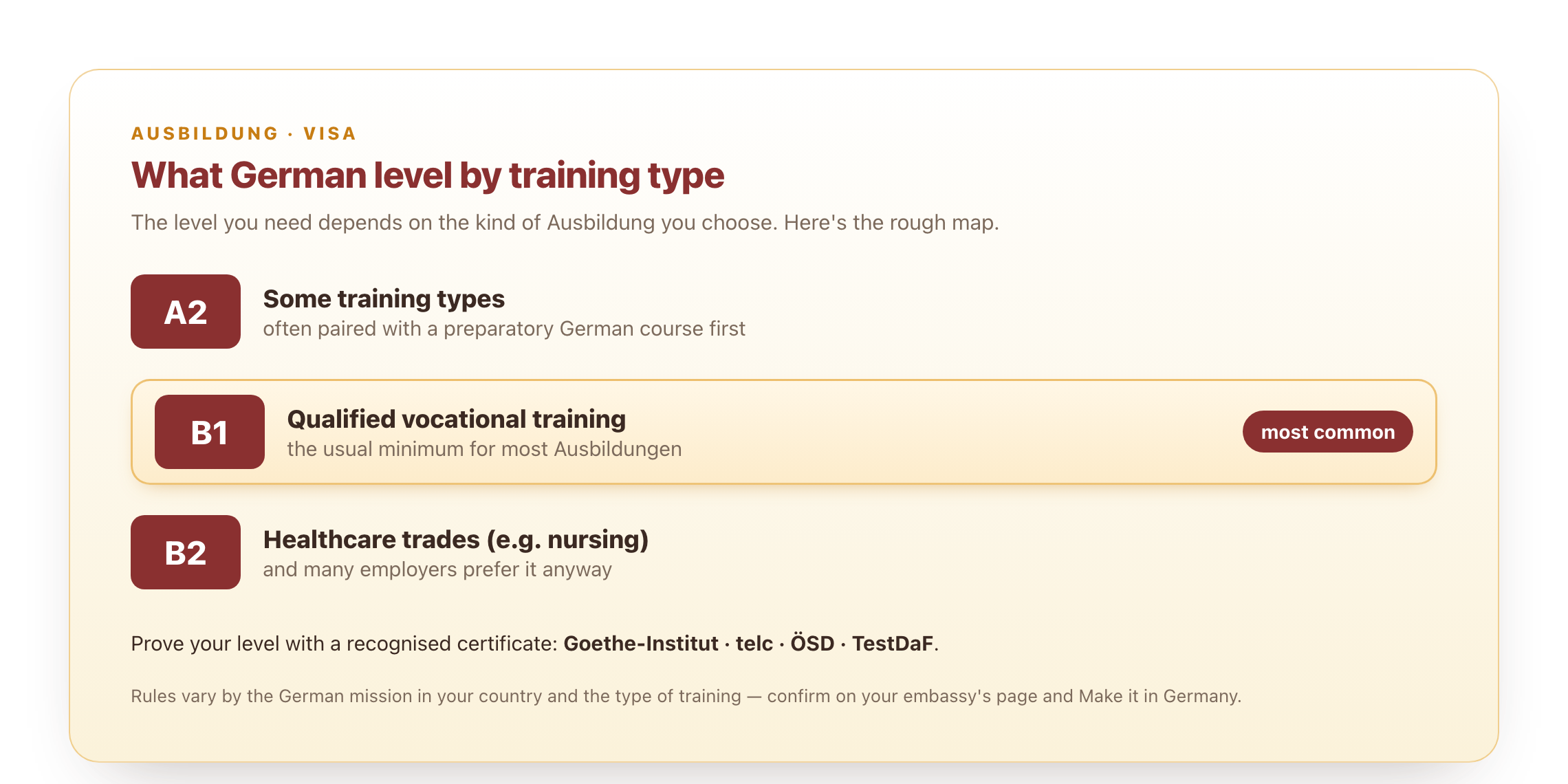
It depends on the Ausbildung you pick. Here's the rough map.
- B1 (CEFR) is the usual minimum for qualified vocational training.
- A2 can be enough for some training types, often paired with a preparatory German course before the training starts.
- B2 is common for healthcare trades like nursing, and many employers prefer it even where B1 is the visa floor.
If you're heading into care work, read what German level nurses need to work in Germany before you lock in a target.
Which certificate proves your level
You can't just say you're B1. You prove it with a recognised certificate from one of these.
- Goethe-Institut
- telc
- ÖSD
- TestDaF
B1 is the level most Ausbildung applicants need first. My guide on how to pass the Goethe B1 exam walks you through exactly what the test asks.
Aim a little higher than the minimum
The visa floor and real life aren't the same thing. If B1 gets you the visa but your trainers and colleagues speak fast B2, the first weeks are rough.
In my course I push students past the paper requirement, so day one on the job actually feels manageable. The German for Ausbildung track is built for this exact path.
Check your own case
One honest caveat: the rules vary by the German mission in your country and by the type of training. Confirm the exact level on your embassy's page and on Make it in Germany before you book an exam.
Want to hit your Ausbildung level without guessing? Start your 5-day free trial and see how far you get in five days. 🚀