
What German Level Do You Need to Study at a German University?

Most German degrees need B2–C1 — but the exact level depends on your programme. Here's what to aim for and which test to take.
Short answer: for most German-taught degree programmes you need B2 to C1. The exact level depends on the university and the specific course.
So before you book any exam, find the requirement for your programme. It varies a lot, and guessing wastes months.
Which German proofs do universities accept?
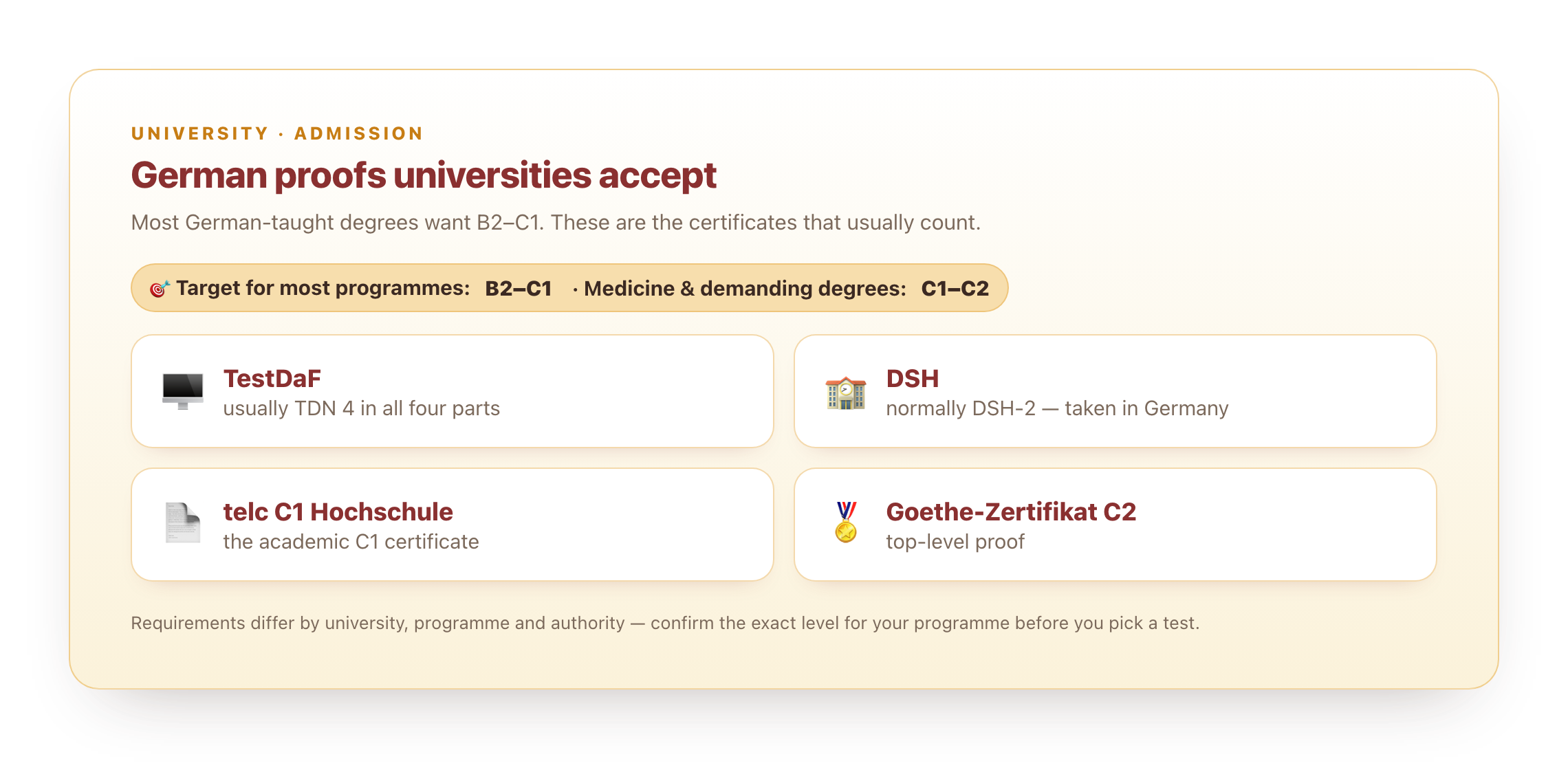
Most German universities accept a small set of recognised certificates. The common ones are:
- TestDaF — usually TDN 4 in all four parts
- DSH — normally DSH-2, and you take it in Germany
- telc C1 Hochschule
- Goethe-Zertifikat C2
Which one you should sit depends on your situation and where you'll be when you take it. I broke down the choice in Goethe vs telc: which German exam to take.
When you need more — or no German at all
Some programmes sit higher. Medicine and other demanding degrees often ask for C1 or C2.
Others ask for less, or nothing:
- Short courses of one or two semesters are often exempt from the full language proof.
- Fully English-taught programmes may not require German at all.
Still, "may not require German" is not the same as "you won't need it" — daily life, paperwork and part-time work all run in German. If the levels themselves feel fuzzy, my guide to the German levels A1 to C1 explained sorts that out in a few minutes.
Check the official requirement first
Here's the honest part: requirements differ by university, by programme and by the authority handling your case. One course wants TDN 4, the next insists on DSH-2 taken in Germany.
So confirm the exact level for your specific programme before you pick a test. The official portal Make it in Germany is a solid starting point, then check your university's own admissions page.
Once you know your target, the job is simple: build that German steadily, with a plan. That's what my course on German for moving to Germany is for. Start your 5-day free trial and see how far you get. 🚀