
A1, A2, B1, B2, C1: What the German Levels Actually Mean
What A1 to C1 really mean — and the exact German level you need for citizenship, nursing, a job or university.
German levels run from A1 (total beginner) to C2 (mastery). Most people living in Germany are aiming for B1 or B2 — so once you know your target, you know exactly how far you have to go.
The levels in plain words
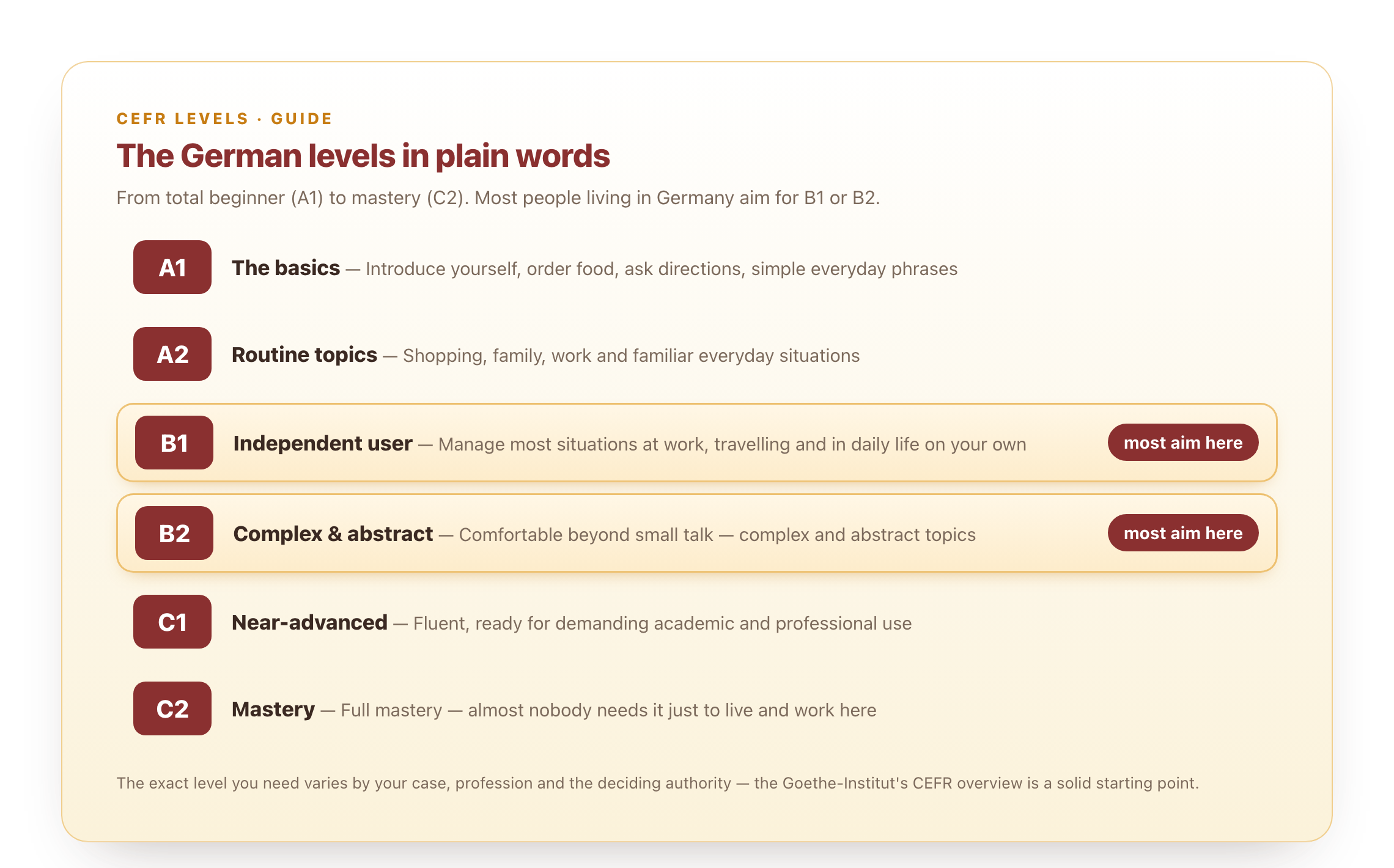
They all sit on the CEFR scale. Here is what each one actually lets you do.
- A1 — the basics. Introduce yourself, order food, ask for directions, handle simple everyday phrases.
- A2 — simple routine topics: shopping, family, work, familiar everyday situations.
- B1 — independent user. You manage most situations while travelling, at work and in daily life on your own.
- B2 — comfortable with complex and abstract topics, not just small talk.
- C1 — near-advanced and fluent, ready for demanding academic and professional use.
C2 sits above C1 as full mastery. Almost nobody needs it just to live and work here.
Which level do you actually need?
This is the part that matters. Your goal decides your target.
- B1 is the common bar for citizenship, many jobs, and the Ausbildung visa.
- B2 is the typical bar for nursing recognition, many skilled jobs, and university entry.
Be honest about one thing: the exact requirement varies by your case, your profession and the authority deciding it. Always check the official rule for your situation — the Goethe-Institut's overview of the CEFR levels is a solid starting point.
So what's the plan?
Pick your target level first, then work backwards. Curious about the timeline? I break it down in how long it really takes to reach A1, B1 and B2. And when it's exam time, Goethe vs telc: which German exam to take helps you choose.
In my course I take you step by step from A1 upward, so you never have to guess which level you're on. See how the German course is structured and start where you actually are. Ready to try it? Start your 5-day free trial 🚀